
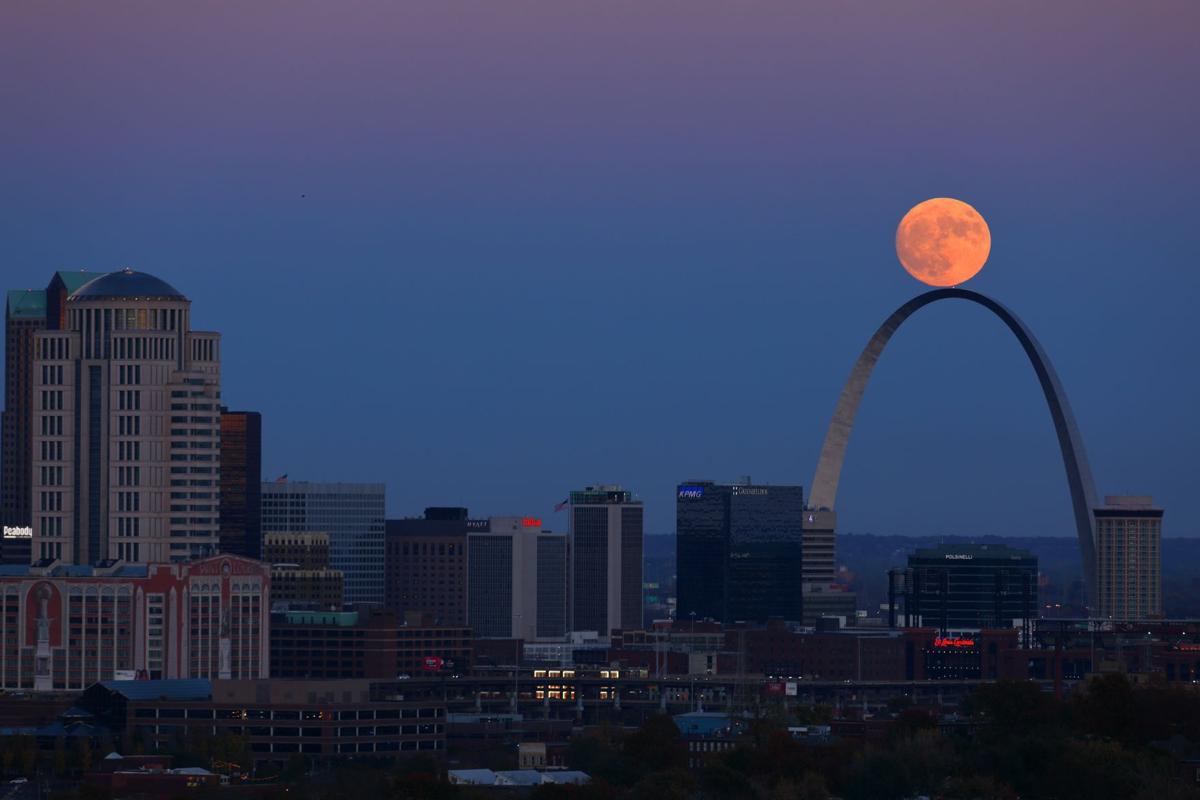
A supermoon is a full moon or a new moon that approximately coincides with the closest distance that the moon reaches to earth in its elliptic orbit, resulting in a slightly larger-than-usual apparent size of the lunar disk as seen from Earth.[1] The technical name is the perigee syzvgy of the Earth–Moon–Sun system or more simply full (or new) Moon at perigee. The term supermoon is astrological in origin, and has no precise astronomical definition.
The real association of the Moon with both oceanic and crustal tides has led to claims that the supermoon phenomenon may be associated with increased risk of events like earthquakes and volcanic eruptions but no such link has been found.
The opposite phenomenon, an apogee syzvgy, has been called a micromoon, though this term is not as widespread as supermoon. Also, some do not consider new Moons near perigee as supermoons. Of the possible 12-13 full or new Moons each year, 3-4 usually may be classed as a supermoon as commonly defined.

No comments:
Post a Comment